A wall repainted at night, a pair of customized sneakers, a track recorded in a stairwell: urban culture is born from concrete actions, rooted in specific places. It is often reduced to a musical movement or a fashion style, but it functions as an ecosystem where each discipline, from graffiti to beatmaking, constantly feeds into the others.
Graffiti and mural art: when the terrain dictates the technique
Painting on a rusty metal curtain or a smooth concrete wall is not the same action. The surface dictates the choice of nozzle, the pressure of the spray can, and sometimes even the color palette. Artists working outdoors contend with humidity, the texture of the plaster, and the low morning light that reveals or flattens contrasts.
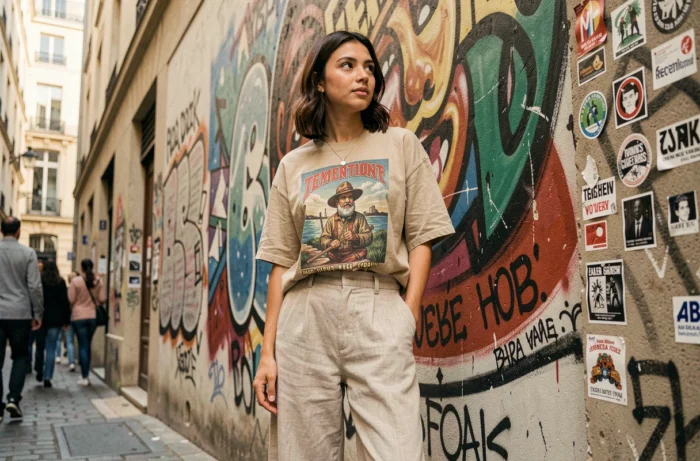
This physical constraint produces recognizable styles from one neighborhood to another. In Vilnius, which has become a stronghold of street art in the Baltic countries, murals play on large flat surfaces inherited from Soviet architecture. In Paris, the density of buildings pushes artists towards more compact formats, often focused on doors, electrical boxes, or construction fences.
Resources and reports on these local scenes can be found on https://tripleldemag.com/, where the journeys of emerging figures in graffiti and urban fashion are regularly documented.
The wall is never a neutral canvas; it imposes its rules. It is this dialogue between the artist and their support that distinguishes urban art from a mere transposition of gallery art into the open air.
Streetwear and sneakers: what separates trend from sustainable style
Streetwear generates a constant flow of collaborations, limited drops, and resales. For someone just starting out, the volume of information can be overwhelming. However, it is possible to quickly sort through by observing three criteria.
- Fit and materials matter more than the logo. A well-cut, thick cotton hoodie lasts several seasons, while a hype piece made of thin fabric distorts after a few washes.
- The second-hand market now structures access to sought-after pieces. Buying second-hand allows you to wear vintage models that are unavailable in stores, without relying on release schedules.
- Local artists who screen print their own designs often offer unique pieces at more accessible prices than major brands. This is a concrete entry point into urban fashion.
Prioritizing textile quality and fit over the name on the label remains the most practical advice for building a coherent streetwear wardrobe. Feedback varies on the durability of certain emerging brands, but the feel of the fabric often says more than a product sheet.
Beatmaking and rap: producing urban music without a studio
The image of the professional recording studio persists, but the majority of tracks circulating today on streaming platforms are produced in bedrooms, on laptops equipped with accessible software. The beatmaker works with headphones, a MIDI keyboard, and a basic audio interface.
What really changes the quality of a track at this level of equipment is the acoustic treatment of the room and the mixing of vocals. Sticking foam on the walls is not enough: one must understand how sound bounces in a small space to avoid unwanted frequencies that muddy the vocal recording.
The influence of French rap on production codes
French rap has developed its own sound signatures. Productions incorporate samples from raï, chaâbi, or French chanson, creating a musical landscape distinct from the American scene. These choices are not merely a cultural nod: they define an artist’s sonic identity and their ability to reach an audience that recognizes these references.
The figure of the producer-artist, who composes, records, and mixes without intermediaries, has become common. This self-taught path is not without technical limitations, but it allows for a responsiveness that traditional circuits cannot offer.

Local cultural funding and its impact on urban scenes
Urban cultures depend partly on access to spaces: authorized walls for graffiti, rehearsal rooms, venues for events. However, cultural spending by local authorities has been slowly eroding for several years, as confirmed by the dashboard from the Ministry of Culture covering the period 2019-2024.
This decrease in constant euros directly affects local facilities. When a municipality cuts its cultural budget, it is the artistic residencies, street festivals, and hip-hop workshops that lose their slots first. Certified structures fare better, but initiatives led by neighborhood associations are facing a scissor effect between rising costs and stagnant subsidies.
What this means for emerging artists
A graffiti artist or dancer just starting out needs a regular space to progress. Without an associative venue or accessible legal wall, practice shifts to digital or informal locations, with the legal constraints this entails. Physical access to a creation space remains the primary barrier for local urban scenes.
Urban culture is not limited to what we see on a screen. It is built in parking lots, in squares, in repurposed wastelands. When these spaces disappear or become inaccessible, the entire transmission chain, from the old to the beginner, weakens. Preserving these physical places means preserving a city’s ability to produce its own artists rather than simply consuming those from elsewhere.