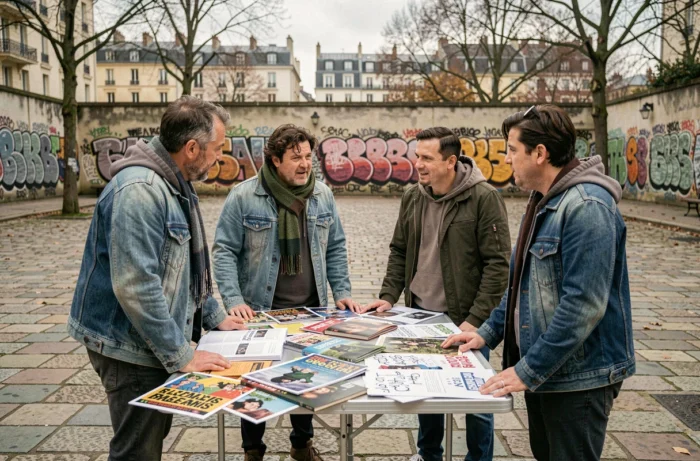
Anarchism is not just about images of barricades and black flags. It is a structured political philosophy, with thinkers, internal debates, and active organizations. In France, the anarchist movement has a long history of nearly two centuries, and it continues to produce texts, congresses, and militant actions.
Anarcho-syndicalism and labor law: an overlooked legal recognition
Did you know that anarchist unions can sit in French labor institutions? This question is not theoretical. The Court of Cassation established a clear principle since a ruling on October 13, 2010: claiming to be anarchist is not enough to withdraw representativeness from a union. It is necessary to prove actual illicit acts or objectives.
This legal point changes the game. Organizations like the National Confederation of Labor (CNT) participate in professional elections and defend employees before labor courts. Anarcho-syndicalism is therefore not confined to militant circles. It occupies a modest, yet significant, place in the French union landscape.
Online resources document this daily militant activity, as can be seen on lameche.org, which relays initiatives related to social and libertarian struggles.
Proudhon, Bakunin, Kropotkin: the foundations of anarchist thought
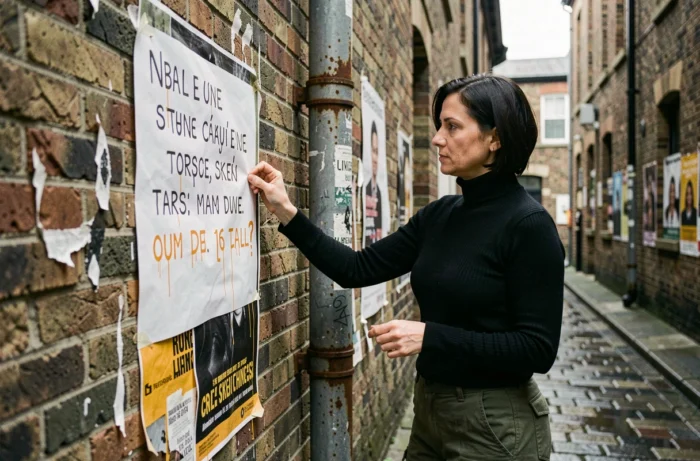
To understand anarchism, one must go back to three names. The first is Pierre-Joseph Proudhon. This Frenchman, born in Besançon, is often considered the founding father of the movement. His phrase “property is theft” marked 19th-century political thought. Proudhon did not advocate chaos but a society based on federalism and free association.
Next is Mikhail Bakunin, a Russian who radicalized the project. Where Proudhon remained cautious about the question of revolution, Bakunin embraced a complete break with the State. He confronted Karl Marx head-on within the First International, causing a historic split between authoritarian socialists and libertarians.
Finally, Pierre Kropotkin brought a scientific dimension to anarchism. A geographer by training, he developed the concept of mutual aid, based on observations of nature. For him, cooperation among individuals is a more powerful engine of evolution than competition. His anarcho-communism proposed a pooling of resources without a central authority.
Louise Michel and propaganda by the deed in France
France played a central role in anarchist history. Louise Michel, a teacher and activist, was the first anarchist figure to wave the black flag during the Paris Commune in 1871. She embodies a popular anarchism rooted in concrete social struggles.
The 1890s marked a darker turning point. Activists like Ravachol and Émile Henry resorted to bombings. In 1892, the building inhabited by Judge Benoît was blown up. In 1894, President Sadi Carnot was assassinated in Lyon by Caserio. The government responded with the “scélérates laws,” which restricted freedom of the press and association.
The strategy of propaganda by the deed isolated the anarchist movement from its popular base. After Carnot’s assassination, even committed activists distanced themselves from violence. The movement then reoriented towards revolutionary syndicalism, which was more sustainable and more rooted in the working world.
Anarchist Federation and the current state of the libertarian movement in France
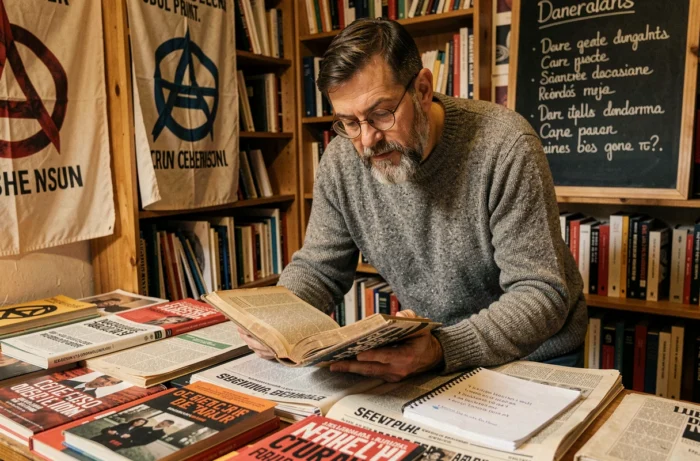
French anarchism is not a museum piece. The Anarchist Federation holds regular congresses and produces resolutions on contemporary issues. Its 82nd congress, held in May 2024, addressed very current topics:
- The critique of military bloc logics in the context of wars in Ukraine and the Middle East
- The articulation between libertarian principles and ecological, anti-racist, and feminist struggles
- The exit from nuclear logic and the rejection of military powers as a central strategic axis
The Libertarian Communist Union (UCL), another active organization, merged in 2019 two currents (Libertarian Alternative and the Coordination of Anarchist Groups). It regularly publishes political analyses and participates in social mobilizations.
Summary or platform: an old debate still alive
Why so many different organizations? French anarchism has been traversed since the 1920s by a structuring debate between two models. The “platformist” model advocates a tight organization with a common political line. The “synthesist” model prefers to group various trends under one roof, without a single line.
This debate between platform and synthesis explains the plurality of libertarian organizations in France. The Anarchist Federation is more aligned with synthesis, while the UCL leans towards the platform. Far from being a weakness, this diversity reflects a founding principle: to refuse that a single direction imposes its vision.
Anarchism and French society: what concrete legacies
The anarchist influence extends far beyond militant circles. Several ideas promoted by the libertarian movement have permeated French society:
- Popular education and alternative pedagogies, inspired by the “libertarian schools” of Sébastien Faure
- Direct action syndicalism, which prioritizes strikes and self-organization over institutional negotiation
- Self-management practices, experimented in cooperatives, squats, and self-managed cultural spaces
Anarchism has durably influenced French political culture, even when its ideas are not explicitly identified as such. May 68, the ZADs, certain forms of civil disobedience: these mobilizations draw from a libertarian heritage, sometimes without explicitly claiming it.
The anarchist movement in France remains a living thought, adapting to contexts without renouncing its rejection of imposed authority. Its ability to articulate 19th-century principles with 21st-century ecological or feminist struggles shows that the libertarian question has lost none of its relevance.