New Zealand attracts French-speaking travelers every year, captivated by spectacular landscapes and a unique bicultural culture. Before packing their bags, several factors deserve careful analysis: recent immigration formalities, logistics for traveling between the two islands, and the choice of stay format.
Online visa application: what changes since October 2026
Since October 1, 2026, Immigration New Zealand no longer accepts paper forms for several categories of Visitor Visas, except in exceptional circumstances. This change directly affects French speakers who do not benefit from an entry exemption and must apply for a visa before departure.
The shift to a fully digital process involves some practical constraints. Documents not in English must be accompanied by an English translation. The photograph and passport information must exactly match the data entered online.
Immigration New Zealand published a reminder on September 29, 2026, urging travelers to submit their applications well before the peak season. Processing times may lengthen between November and February, the summer period in New Zealand. Anticipating several weeks in advance remains the safest strategy to avoid a refusal due to an incomplete or late application.
For French speakers preparing a trip and looking for specialized resources, the website https://www.breizh-zelande.fr/ gathers practical information tailored to French travelers.
North Island or South Island: comparison to choose your itinerary
The choice between the two islands (or the decision to combine both) structures the entire trip. The profiles of each island differ significantly.
| Criterion | North Island | South Island |
|---|---|---|
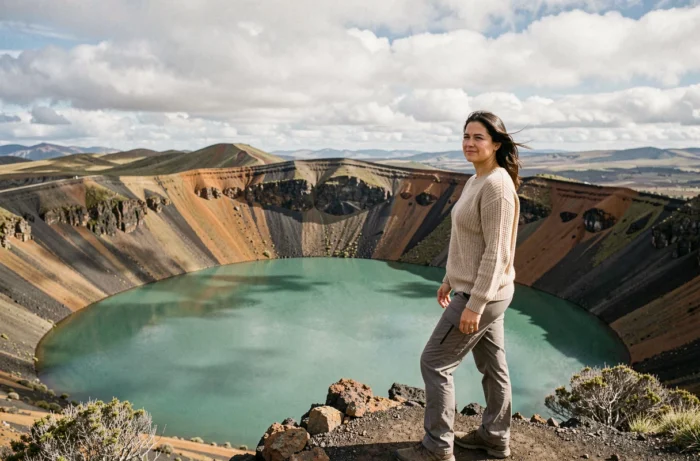
| Dominant landscapes | Active volcanoes, geysers, subtropical forests | Fjords, glaciers, alpine mountains |
| Māori culture | Strong presence (Rotorua, Bay of Islands) | Less concentrated, more related to jade (pounamu) |
| Main city | Auckland, Wellington (capital) | Christchurch, Queenstown |
| Population density | Higher, denser road network | Low, long distances between stops |
| General climate | Milder, wetter in the north | Cooler, marked differences between the west and east coasts |
Travelers with two weeks or less must make a choice. The South Island concentrates the most spectacular landscapes per kilometer traveled, but the North Island offers a more accessible Māori cultural immersion. Combining both requires planning for the ferry between Wellington and Picton, or an internal flight.
Driving and transportation between the islands
Driving is on the left, with often narrow and winding roads outside the main routes. Public transport remains limited in New Zealand, particularly on the South Island. The road trip by campervan or rental car is the dominant format for independent travelers.
The ferry crossing between the two islands takes several hours and traverses the Cook Strait. Booking in advance during peak season avoids unpleasant surprises, especially when traveling with a vehicle.
Road trip or organized tour: which format for a stay in New Zealand
The choice of travel format depends on several factors that French speakers sometimes underestimate.
- The camping road trip offers the greatest flexibility and allows stays in the parks of the Department of Conservation (DOC), often located in remarkable and isolated areas. It requires total autonomy and good preparation of the stages.
- The guided tour with a French-speaking guide removes the language barrier and provides access to cultural explanations (Māori protocols, local history) that are difficult to obtain alone. This format is suitable for travelers who prefer a structured itinerary.
- The tailor-made trip through a specialized agency combines reserved accommodations and freedom of movement. Prices vary significantly depending on the season and the level of comfort chosen.
Each format involves different budgets and rhythms. Camping reduces accommodation costs but requires investment in renting a fitted vehicle. The guided tour, on the other hand, generally includes transport and logistics.

Weather and biculturalism: two variables that French speakers overlook
The New Zealand climate changes quickly, sometimes several times in the same day. A clear sky in the morning can turn into a storm in the afternoon, especially in the mountains or on the west coast of the South Island. Planning for layers and waterproof gear is not a trivial piece of advice; it is a concrete necessity for any hike.
Sun exposure poses a real risk. The ozone layer is thinner in the southern hemisphere, making UV rays particularly aggressive, even on cloudy days.
Biculturalism in daily life
New Zealand is officially named Aotearoa in Māori. Biculturalism is not a tourist showcase: it structures daily life, signage, and official protocols. Sitting on a table is considered disrespectful in Māori culture, and this prohibition has extended to the entire population.
French-speaking travelers benefit from familiarizing themselves with a few words of te reo Māori before departure. Locals appreciate the effort, and it facilitates understanding of the place names that are omnipresent on maps and signs.
New Zealand remains a country where administrative and logistical preparation determines the quality of the stay. Submitting your visa application online early enough, choosing your island based on available time, and adapting your travel format to your level of autonomy are the three decisions that make the difference between a forced itinerary and a well-managed trip.